
Bioexcelife
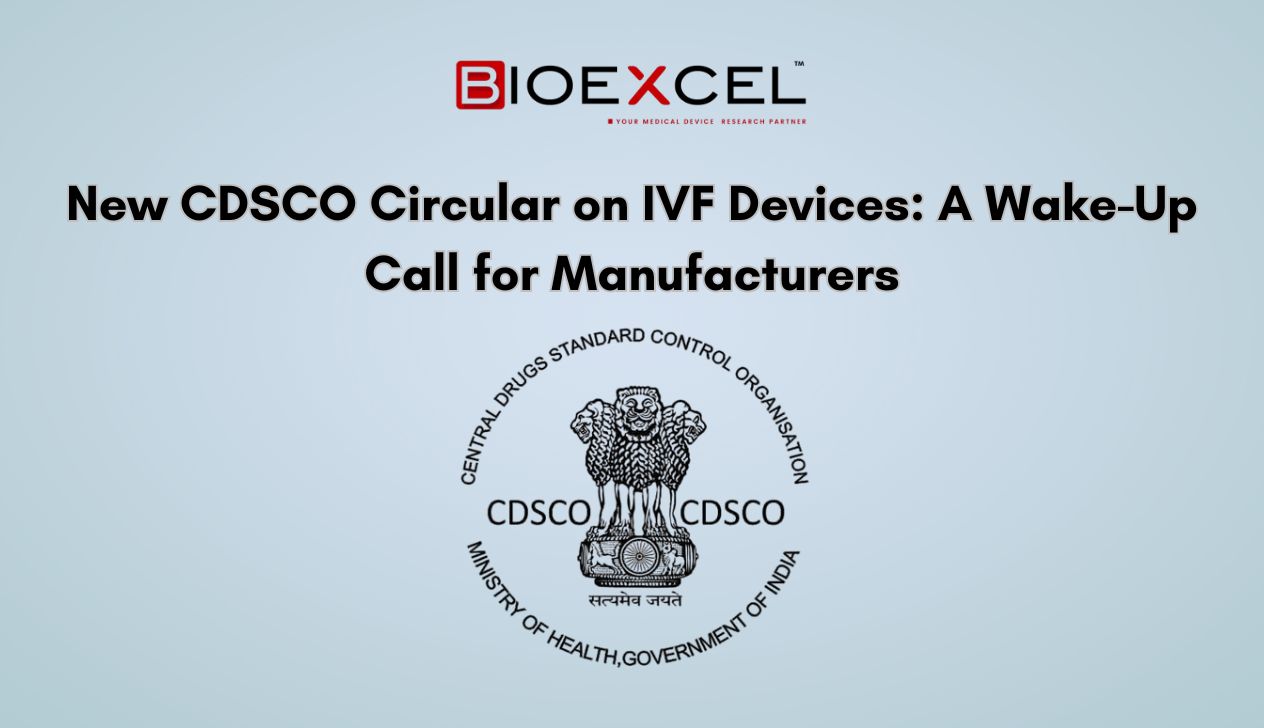
India’s fertility care sector is growing fast. However, with that growth comes stronger regulatory oversight.
In a recent circular, the Central Drugs Standard Control Organisation (CDSCO) has made its position clear: medical devices used in In-Vitro Fertilization (IVF) and Assisted Reproductive Technology (ART) procedures, including IUI kits and centrifuges for sperm washing, fall under the scope of medical device regulation in India.
This is an important update for manufacturers, importers, distributors, and all stakeholders involved in reproductive healthcare devices.
Why This CDSCO Circular Matters
The CDSCO circular is more than a routine notification. It is a clear regulatory signal to the industry.
According to the notice, certain firms have been selling devices used for IVF and ART procedures without obtaining the required license under the Medical Devices Rules, 2017. CDSCO has now directed authorities to maintain strict vigilance and ensure that such devices are not imported, manufactured, sold, or distributed without proper compliance.
This means the regulator is now placing sharper focus on the fertility device segment, especially where licensing gaps may exist.
Which Devices Are Covered?
The circular specifically refers to devices intended for In-Vitro Fertilization and related procedures, such as:
IUI (Intrauterine Insemination) kits, devices used in sperm preparation, and centrifuges for sperm washing, among others used in Assisted Reproductive Technology procedures.
CDSCO has clarified that these products are covered under the definition of a medical device and are regulated under the provisions of the Drugs and Cosmetics Act, 1940 and the Medical Devices Rules, 2017.
This clarification is critical because many businesses may have treated such products as routine lab or fertility-use items without fully assessing their regulatory status.
What the Regulation Means for Industry
For companies operating in the IVF and ART segment, this circular sends a direct message: regulatory compliance is mandatory.
If your product is used in reproductive procedures and meets the definition of a medical device, you may need the appropriate license for:
- import
- manufacturing
- sale
- distribution
The circular also notes that devices categorized as Class A non-sterile and non-measuring devices are exempt from licensing. However, that does not remove the need for correct classification. A wrong assumption at this stage can create serious compliance risk.
A Major Shift for the Fertility Device Market
India’s fertility ecosystem has expanded rapidly in recent years. Clinics, labs, and technology providers are introducing more specialized products to support reproductive treatment. As the sector grows, regulators are also increasing scrutiny.
This CDSCO update shows that fertility-related devices are no longer outside the main stream of medical device enforcement. The market is moving toward stronger control, better documentation, and tighter licensing expectations.
For genuine manufacturers and compliant importers, this is a positive step. It improves market discipline, protects patient safety, and reduces the presence of unregulated products.
What Companies Should Do Now
This is the right time for companies dealing with IVF and ART-related products to review their regulatory position.
Start by checking whether your product falls within the medical device definition under Indian law. Then assess its classification, licensing needs, technical documentation, and legal status for import or sale.
Many businesses face risk not because they intend to avoid compliance, but because they fail to classify the product correctly or misunderstand the licensing requirement. In a stricter enforcement environment, that gap can become costly.
A proactive review now can prevent delays, notices, and business disruption later.
Why This Update Is Important for Patient Safety
Reproductive healthcare is a sensitive area. Devices used during fertility treatment directly influence handling, preparation, and procedural support in highly controlled medical environments.
That is why regulatory oversight matters.
By reinforcing licensing obligations for IVF and ART-related devices, CDSCO is working to ensure that only compliant and properly regulated products enter the Indian market. This supports quality, accountability, and confidence in fertility treatment procedures.
How Bioexcel Can Help
At Bioexcel, we help medical device companies understand evolving Indian regulations and build a smoother path to compliance.
If your company deals with IVF devices, IUI kits, sperm washing systems, or other ART-related medical devices, we can support you with classification review, regulatory strategy, licensing pathways, and documentation planning.
In a changing regulatory environment, the right guidance can save both time and risk.
The latest CDSCO circular is a strong reminder that the regulatory landscape for fertility and reproductive healthcare devices in India is becoming more structured and closely monitored.
For manufacturers and importers, this is the time to act with clarity. If your device is used in IVF or ART procedures, do not leave compliance to assumption. Review the classification, confirm the licensing pathway, and make sure your market access strategy is aligned with Indian regulations.
In today’s market, compliance is no longer just a legal requirement it is a business necessity.
Need support with CDSCO compliance for IVF or ART medical devices?
Partner with Bioexcel for expert regulatory guidance and a smoother route to market.